Business structure8 min read
Sole trader or limited company: how to choose
The right structure depends on profit levels, risk, admin appetite and how you want to take money out. A balanced look at both, without the usual oversimplification.
Updated
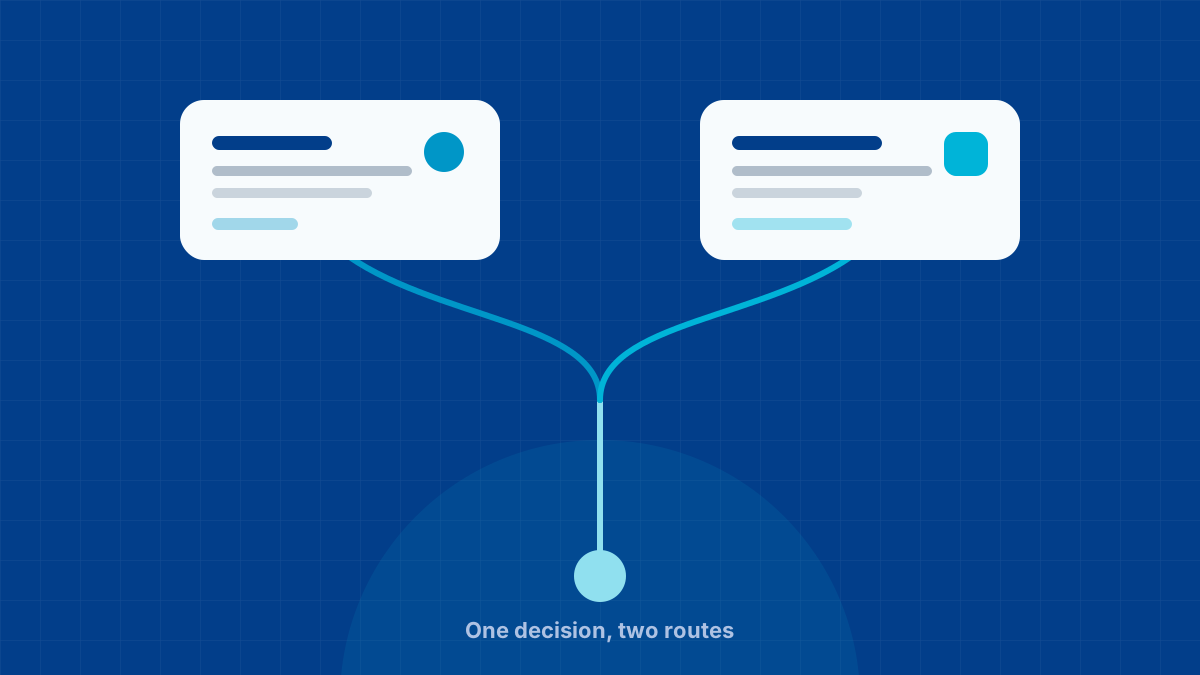
This is the most common question we are asked by people starting out, and the honest answer is that it depends on more than tax. Profit levels matter, but so do liability, admin, how you want to draw money and where you expect the business to be in three years.
Trading as a sole trader
As a sole trader you and the business are the same legal person. You register for Self Assessment, keep records of income and expenses, and pay income tax and National Insurance on your profits. There is no separate company to file for and no Companies House record.
- Simple to start and to stop, with minimal formal filing.
- Lower ongoing accountancy and administration costs.
- Your business affairs stay private.
- You are personally responsible for the debts of the business.
- All profit is taxed as it arises, whether or not you have drawn it.
Trading through a limited company
A limited company is a separate legal entity. It owns its own assets, owes its own debts and pays corporation tax on its profits. You are usually both a director and a shareholder, and you take money out as salary, dividends, or a combination of the two.
- Limited liability, so personal assets are generally protected if the business fails.
- Flexibility over when and how profits are drawn.
- Some clients and suppliers prefer to contract with a company.
- More filing: statutory accounts, a corporation tax return and a confirmation statement each year.
- Company information, including directors and accounts, appears on the public register.
- Directors have legal duties, and money cannot simply be taken out at will.
Questions worth answering first
- 1What profit do you realistically expect over the next two years, not the next two months?
- 2Do you need to keep money in the business for equipment, stock or a buffer?
- 3How much personal risk does your work carry, and would limited liability change your exposure?
- 4Do your customers or agencies require you to work through a company?
- 5Are you comfortable with the extra filing, or would you rather pay someone to handle it?
- 6Are you likely to take on a business partner or outside investment?
Changing structure later
You are not locked in. Many businesses start as a sole trader and incorporate once profits are consistent enough to justify it. Moving across involves transferring the trade and assets to the new company, notifying HMRC, opening a company bank account and changing contracts and invoicing, so it is worth planning the timing rather than doing it mid-quarter.
Going the other way is possible but less common, and closing a company properly has its own process and costs. That asymmetry is a reason to give the initial decision a little thought rather than incorporating by default.
A reasonable way to decide
Work out your expected profit, model both structures against it including the cost of the extra compliance, then weigh the numbers against the non-financial factors: risk, privacy, admin and how your clients prefer to contract. If the two options come out close, the simpler structure is usually the better starting point, because moving to a company later is far easier than unwinding one.